American composer of sacred & secular art music
bio & statement
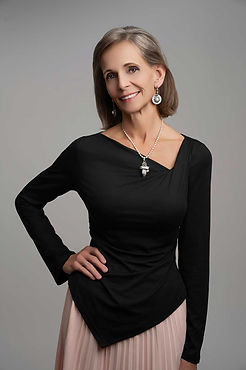
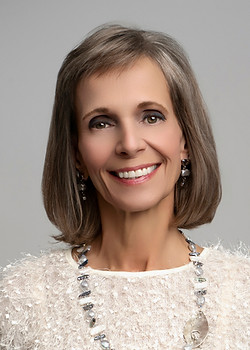
Crystal Godfrey LaPoint
. . . began her musical studies at the piano at the age of 5, continuing with lessons on the violin, voice, and organ throughout her youth. At age 16, she began attending the Setnor School of Music at Syracuse University, where she earned her Bachelor’s (1979) and Master’s (1984) degrees in Piano Performance, and a Master’s (1988) degree in Composition & Theory. She studied piano with the late George Pappastavrou, and composition with Dr. Joseph Downing and the late Dr. Brian Israel. She was the first and only two-time recipient of the Eloise K. Heaton Fellowship – in Composition (1986) and in Fine Arts & Social Justice Education (2009).
LaPoint is an accomplished professional pianist/accompanist as well as an award-winning, commissioned and published composer. She has performed with and written for the Syracuse Symphony Orchestra, Syracuse University Oratorio Society, Syracuse Children's Chorus, Syracuse Chorale, Tufts University Concert Choir, Cambridge Community Chorus, and many other choral and chamber ensembles, as well as countless vocal and instrumental soloists. Works in her catalog (published with Boosey & Hawkes, Alfred, Lawson-Gould, Hinshaw, CGL Music, and others) have been performed and recorded across the U.S., in Europe, and beyond, including performances in Carnegie Hall and at the Llangollen International Musical Eisteddfod. LaPoint is the only two-time first-place winner of the Ithaca College Choral Composition Competition (in 1988 for Four Romantic Songs and in 1999 for Two Songs of Walt Whitman.)
Major works include her setting of Carl Sandburg’s Special Starlight, commissioned by the Syracuse University Oratorio Society, which premiered the work (along with a chamber ensemble comprising members of the Syracuse Symphony Orchestra) at an historic concert commemorating the 100th anniversary of the opening of Crouse College – home to Syracuse University’s Setnor School of Music. Her Five Songs for Five Souls, scored for orchestra, SATB chorus and soloists, was commissioned and premiered by the Syracuse Chorale and Syracuse Symphony Orchestra. The Syracuse Symphony also premiered her Keepsakes from Childhood under the baton of Grant Cooper. Her many other commissioned works include For I Must Sing, composed for youth choir, with commissioning funds from Meet The Composer, Inc. and a consortium of four school-music programs. Other works for youth include My Own Song, which has received over two-hundred performances throughout the U.S., Europe, and East Asia.
In addition to her many choral compositions, Crystal’s Sonata for Bassoon & Piano has been featured at several double-reed symposiums in the U.S. and performed in recitals by distinguished orchestral bassoonists in the UK and Spain.
New works in progress include two compositions featuring familiar sacred texts in contemporary, concert music settings. Devotions – a dramatic triptych of art songs for medium-high voice and piano – is based on three beloved Christian hymns and Sunday School songs: “Holy, Holy, Holy!”, “A Mighty Fortress is Our God”, and “Jacob’s Ladder”. The composer’s own poetic version of the 23rd Psalm serves as the basis for a fresh, fervent, and deeply introspective choral piece: The Lord is my Shepherd for SATB a cappella voices.
“art music” mission statement . . .
As a composer, I have an expansive concept of the term “art music”. I don’t believe it is limited by style or genre, exclusive of all but the most challenging levels of harmonic or rhythmic complexity, nor the sole province of the most accomplished, virtuosic performers, restricted to the most celebrated venues, for the benefit of only the most sophisticated listeners. I believe that “art music” need not — ought not — be an acquired taste. When I am composing (be it for a professional choral ensemble and symphony orchestra, or for a children’s choir’s spring concert or a chancel choir’s Sunday worship) I believe that I’ve achieved artistry when I write music that authentically celebrates the tastes and talents of my performers and their audience. “Art music” demands uncompromising craftsmanship, and an unswerving aspiration to create works that challenge, delight, and inspire new heights of musicianship. But most of all, “art music” is born from a profound respect for the composer’s unique privilege: to participate in the timeless honor of collaborative music-making.
Crystal Godfrey LaPoint